

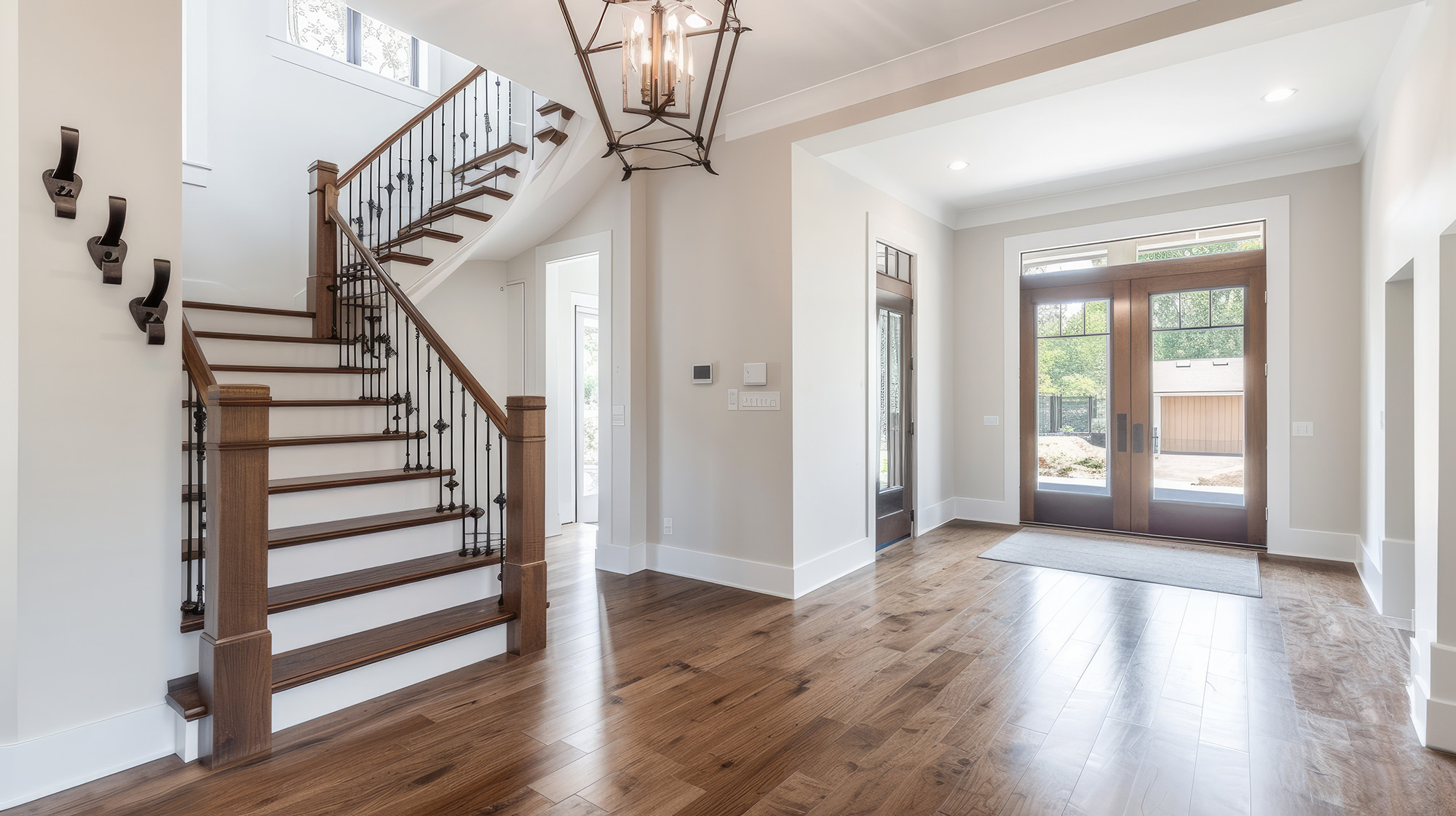
When you choose hardwood flooring for your Amarillo home, you are not only choosing a surface for your floors. You are also adding a major design element that interacts with your doors, baseboards, staircases, and other architectural details. Coordinating these features can help you create a polished interior where every element feels intentionally connected. You can explore Ingrams Flooring hardwood flooring to begin exploring your options. When you are ready for professional guidance, you can also visit the Ingrams Flooring contact page.
Coordinate With Your Door Colors
Your interior doors can have a noticeable effect on how your hardwood flooring looks. You do not necessarily need your doors and flooring to be the exact same color. Instead, you can choose tones that complement each other.
For example, natural or medium hardwood can work well with white, cream, or stained wood doors. If you have darker doors, a lighter hardwood floor can create attractive contrast while keeping the room from feeling too heavy.
Consider Your Baseboards and Trim
Baseboards and other trim create a visual border between your flooring and walls. Because of this, you should consider them when selecting your hardwood color and finish.
White trim can create a crisp contrast against almost any wood tone. If you prefer a warmer and more traditional appearance, you can coordinate stained wood trim with your flooring while allowing subtle differences between the two finishes.
Think About Staircase Design
If your home has a staircase, your flooring choice becomes even more important. Hardwood on nearby floors can help the staircase feel like a natural continuation of the home's design.
You can coordinate the stair treads with your hardwood flooring while using complementary colors on the risers. This gives you an opportunity to create visual interest without making the staircase feel disconnected from the rest of the home.
Use Contrast With Purpose
Matching every wood surface exactly is not always necessary. In fact, too much matching can make a room feel flat. You can create a more interesting interior by using related tones with enough contrast to distinguish individual features.
For instance, medium toned hardwood can work with slightly darker furniture or trim. The key is to repeat complementary tones throughout the room so the different materials feel connected.
Look at Your Home as a Whole
Before making your final flooring decision, step back and consider the larger interior. Look at your doors, staircase, cabinetry, trim, furniture, and wall colors together rather than evaluating the flooring on its own.
This approach helps you select hardwood that supports the existing character of your home while leaving you enough flexibility for future decorating changes.
When you coordinate hardwood flooring with architectural details, you can create a more polished and cohesive interior without making every element identical. Thoughtful combinations of color, contrast, and natural wood tones can help your Amarillo home feel balanced from room to room.
If you are ready to explore hardwood flooring for your home, contact Ingrams Flooring to discuss your project and find an option that works with your home's existing features.

